
In a post on Truth Social, Trump outlined key goals of the campaign, including degrading Iran's missile capabilities, dismantling its defence industrial base, eliminating naval and air power, preventing Tehran from acquiring nuclear capability, and protecting United States allies such as Israel, Saudi Arabia and the United Arab Emirates.

The report said ships must submit full documentation, obtain clearance codes and accept IRGC-escorted passage through a designated corridor.

The fragile ceasefire in West Asia between the US and Iran to halt the hostilities in the region for two weeks faces renewed uncertainty as Tehran reportedly moved to block the strategic Strait of Hormuz once again due to Israel's intensified offensive against Hezbollah in Lebanon, according to Iranian state media Islamic Republic News Agency (IRNA), which US President Trump says was "not included" as part of the ceasefire deal.

Foreign investors have withdrawn over Rs 88,000 crore from Indian equities this month, driven by geopolitical tensions, a weak rupee, and concerns about rising crude oil prices.

West Asia conflict triggers sharp sell-off in Indian markets, with realty, banking and auto stocks leading losses amid energy shock fears.

'Refiners may soon be forced to adjust operations, curtailing runs as product exports stall and directing output solely to domestic markets.'

The recipe for Indian higher education institutions to succeed in the global markets is excellence in academics, promoting contemporary socially relevant material, and enabling individuals (learners) to realise their full potential, suggests N Ravichandran.

The conflict may disrupt Budget 2026-2027 projections, squeezing revenues and raising subsidies, prompting fiscal adjustments and potential reforms, echoing lessons from the Covid-era shock, points out A K Bhattacharya.
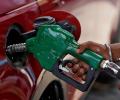
Petrol diesel price today March 20, 2026: IOCL & HPCL hike premium petrol (XP95, Speed, Power) by 2/litre and industrial diesel by 22/litre. Regular petrol in Delhi 94.77, diesel 87.67 unchanged. Full city-wise rates inside.
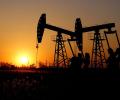
Crude oil prices experienced a sharp decline after US President Donald Trump announced a temporary halt to military strikes on Iran's energy infrastructure, easing geopolitical tensions and supply disruption fears.

An India-flagged LPG tanker, Jag Vikram, has successfully crossed the Strait of Hormuz following a temporary ceasefire between the United States and Iran, marking a significant development for India's energy security.

Whether it's made-to-order fashion, reduced waste or tech-driven showcases, designers are being forced to slow down and think smarter.

If Trump wants peace with Iran, Pakistan will offer to help. If Trump seeks Pakistan's aid to spy on Iran, then too Munir will not hesitate to chip in. At the same time, the ISI will not hesitate to tip off Iran now and then, points out M R Narayan Swamy.

Former US President Donald Trump claimed he stopped a war between India and Pakistan and expressed his desire to be remembered as a great peacemaker.

In a post on X, the embassy said such groups 'may intend to conduct attacks in central Baghdad in the next 24-48 hours', raising concerns over the safety of US citizens and installations in Iraq.

The Americans can occupy Bab el Mandeb, claim to have 'solved' the Strait of Hormuz crisis, declare victory that President Trump so desperately needs, points out Colonel Anil A Athale, former head of the history division, ministry of defence.

Iran on Monday described the 15-point proposal from the United States to end the conflict in West Asia and reopen the strategic Strait of Hormuz as 'excessively demanding', stating that it has prepared its own set of demands to end hostilities, which have now entered their second month.

S&P Global Ratings warns that Indian oil marketing companies like IOC, BPCL, and HPCL may face reduced profit margins due to rising crude oil prices and government pressure to maintain stable retail prices.

Indian markets on Dalal Street rallied sharply as easing tensions in the US-Iran conflict and stable oil prices boosted sentiment. Track Nifty 50 and BSE Sensex performance and key global triggers.

Speaking to North Korea's Supreme People's Assembly on Tuesday, Kim accused the United States of carrying out 'terrorism and invasions' across regions, referring to the ongoing conflict involving Iran.

Researchers at the University of Sheffield have developed a novel method for producing sustainable aviation fuel (SAF) using concentrated solar energy and captured CO2, potentially reducing reliance on used cooking oil.

President Trump asserts the US military has decimated Iran's forces and no longer requires assistance from NATO allies to secure the Strait of Hormuz, despite earlier requests for support.

Speaking to reporters during a cabinet meeting at the White House on Thursday, Trump said the US had engaged in 'very substantial talks' with Iranian officials and described the tanker movement as proof of seriousness in the discussions.

On Saturday, it was reported that a drone strike had targeted the Fujairah Port in the UAE, triggering a fire.

Airports across the country have been placed on operational alert to manage potential flight diversions, unscheduled landings and passenger facilitation requirements.

It may now be time to question the price India is paying for Israel's disregard of the serious undermining of India's energy security, asserts former foreign secretary Shyam Saran.

Amid escalating tensions with Iran, President Trump is urging nations dependent on Middle Eastern oil to deploy warships to the Strait of Hormuz to safeguard critical global energy supplies.

The IRGC also warned residents to evacuate areas near military bases, security centres and government facilities.

India's services sector growth slowed in March, reaching a 14-month low, according to the HSBC India Services PMI. The slowdown reflects weaker new business intakes and rising input costs, particularly in fuel, transport, and logistics.

The big question is whether Trump is any longer in command of the situation. For all practical purposes, the war seems set to cascade as the US is preparing for a potential ground operation in Iran and threatens to destroy 'bridges next, then electric power plants', points out Ambassador M K Bhadrakumar.

The cost of the war is being counted not in the corridors of power in Washington or Tehran, but in Firozabad's darkened furnace rooms, Howrah's idle casting sheds, and a barbershop in Kochi where the wait is suddenly, inexplicably, an hour long, notes Prem Panicker in his must read blog on the Iran War.

'The White House lunch that Trump hosted for Munir last year came just after Munir returned from a visit to Iran, at a moment when Israel and Iran were at war.' 'Trump said after that lunch that the Pakistanis know Iran very well. He likely views Munir as a useful interlocutor that can give helpful insights on Iran.'

According to Iranian state media, Islamic Republic of Iran Broadcasting (IRIB), the threat was articulated by Ebrahim Zolfaghari, spokesperson for Iran's Khatam al-Anbiya Central Headquarters.

Around one full month of supply is firmly arranged with additional procurement being continuously finalised, and oil companies are successfully delivering over 5 million cylinders every day.

Tensions between Washington, DC and Tehran have reached a boiling point, as a heavy barrage of aerial strikes was reported across multiple locations in Iran on Tuesday.

Indian equity markets experienced a significant downturn, with the Sensex and Nifty plummeting due to rising crude oil prices, geopolitical tensions in West Asia, and continuous foreign fund outflows.

The clock on the ceasefire is running out. But everyone's already whispering about round two, possibly as soon as this weekend.

The threat has raised concerns about possible asymmetric attacks outside the region. Iran has also stepped up attacks on energy infrastructure in Gulf countries.

The broader conflict in West Asia, the largest international market for Indian carriers, has forced a sharp reduction in daily flights relative to the summer schedule.

Admiral Alireza Tangsiri was accused of leading efforts to disrupt maritime trade, including actions affecting the Strait of Hormuz.
